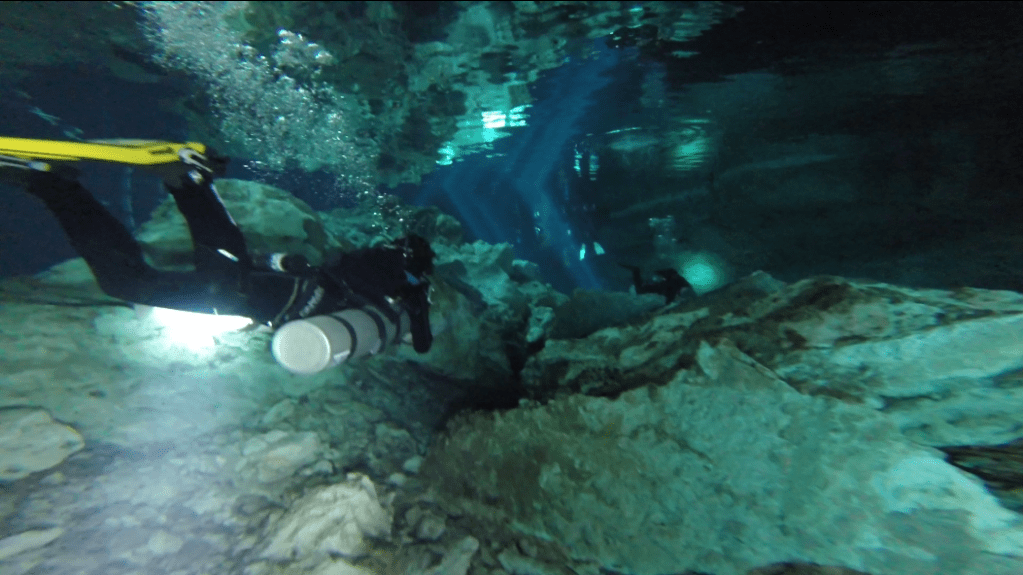
Cave diving presents incredible visual phenomena unlike anything found on land. Some of these phenomena include (but are not limited to): halocline distortions, glass ceiling or mirror-like effects, hydrogen sulfide clouds, tannic acid layers, and shadow and light effects. This post dives into each of these phenomena and their causes.
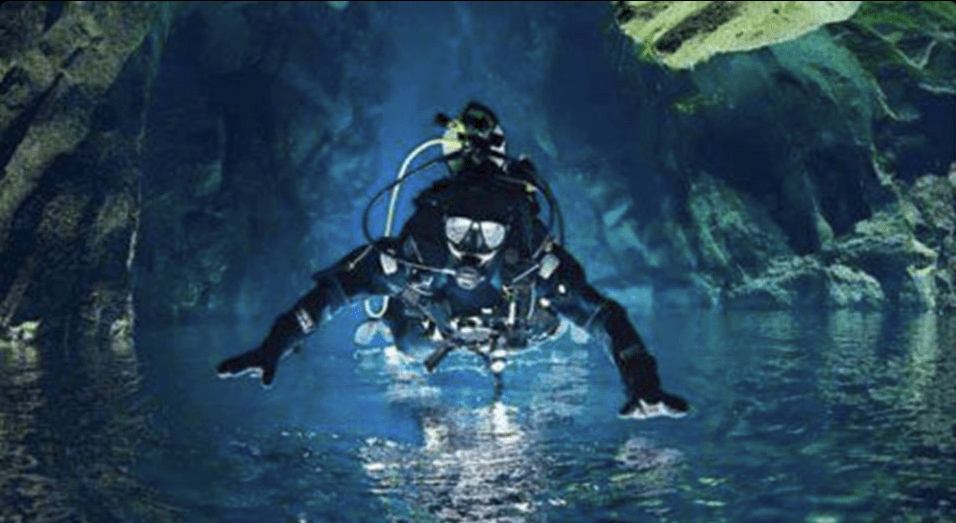
Halocline Distortions
Halcolines occur when freshwater and saltwater layers meet but do not mix. Saltwater is denser than freshwater due to the dissolved salts it contains. When fresh and salt waters do meet, the denser saltwater tends to sink below the lighter freshwater. This stratification can inhibit mixing and result in fascinating visual phenomena. In the following image, taken from Cenote Tours (as my camera is not advanced enough to capture this phenomenon) the diver appears to be floating above the water. Another way this tricks the eyes is by appearing as an underwater lake–a body of water within a body of water. What is actually occurring is the diver is diving through fresh water, above salt water, and the halocline appears like a distinct body of water.
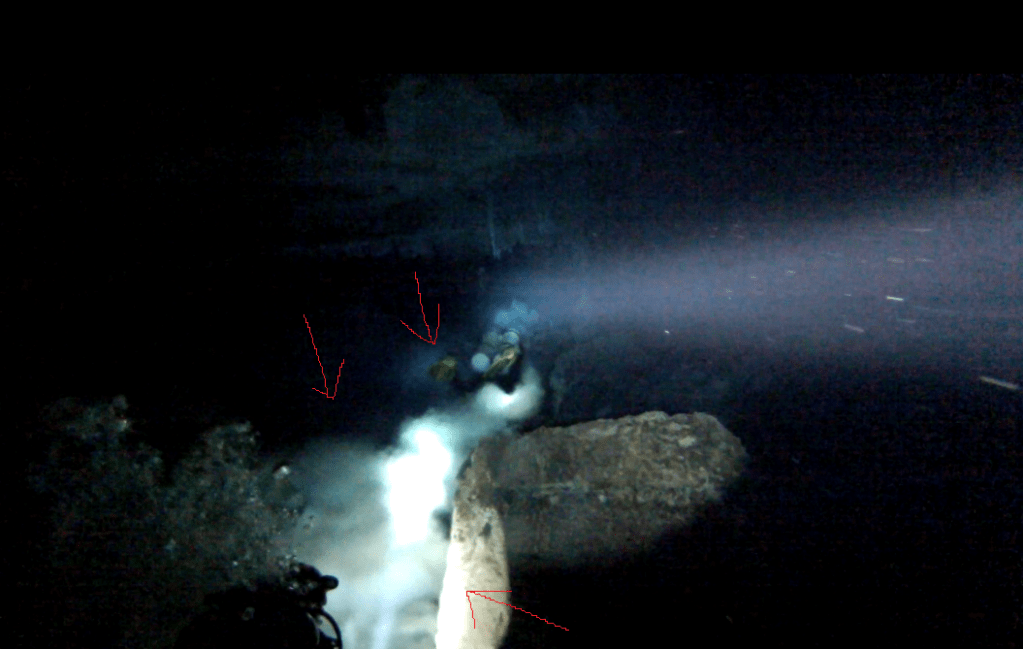
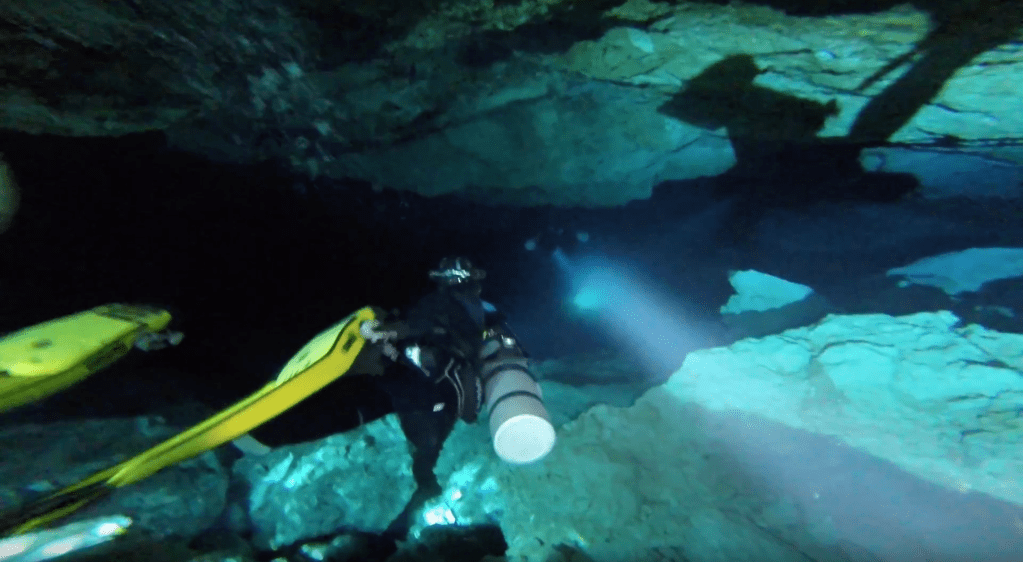
The salt water comes from the ocean, whereas the fresh water comes from rain that seeps through the substrate to finally lay on top of the saltwater. Passing through these waters with different densities causes a visual distortion, like trying to mix vinegar and oil. The water appears as though it is blurry or shimmering. Note in the following image, the author and a dive partner are holding lights, passing through what looks like a blur.

Along with visual effects, haloclines cause rapid buoyancy changes. Archimedes’ principle, a fundamental law of physics that describes how objects behave in fluids, states that any object, wholly or partially submerged in a fluid (liquid or gas), experiences an upward buoyant force equal to the weight of the fluid that the object displaces.
Mathematically, Archimedes’ principle can be expressed as:
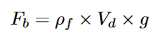
Where:

is the buoyant force.

is the density of the fluid.

is the volume of the fluid displaced by the object.

is the acceleration due to gravity.
The change from one density to a drastically different one in just a few inches or centimeters has an amazing effect on the diver’s body. Trying to descend can become difficult unless air is released from the wing, and on the way up the opposite effect officers, where trying to ascend becomes difficult and air needs to be added to the wing. For me, this created the sensation of “falling up” or “falling down” while passing through haloclines.
Glass Ceiling (or Mirror-Like) Effects
Hydrogen Sulfide Clouds
Cenote Angelita, located in Mexico’s Yucatan Peninsula, is famous for its distinct layer of hydrogen sulfide, which creates a surreal underwater landscape. The phenomenon results from a unique combination of factors: organic decomposition, a halocline, and anaerobic conditions.
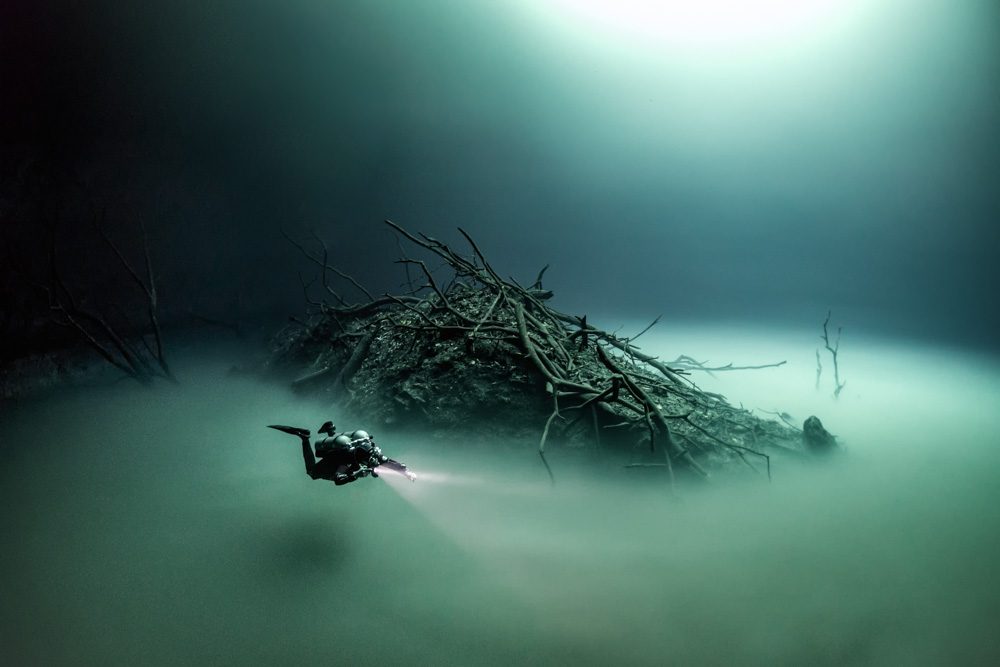
The cenote has a layer of organic material, including leaves and other plant debris, that has settled at the bottom. As the materials decompose they produce hydrogen sulfide gas as a byproduct. In addition, the cenote has both fresh and saltwater layers. The denser saltwater tends to settle below the freshwater, creating a halocline. The hydrogen sulfide gas, being more dense than freshwater but less dense than saltwater, accumulates at this boundary, forming a distinct cloudy later. Making this experience possible, the lower levels of the cenote are anoxic, or devoid of oxygen, which enables anaerobic bacteria to break down the organic matter and produce hydrogen sulfide. The anoxic environment prevents hydrogen sulfide from being oxidized and dispersed, which causes it to accumulate and form a cloud.
Tannic Acid Layers
enter
Shadow and Light Effects
Many types. Some rooms are so large that when you remove the light you cannot see the edges

 shedivescaves.com